

Pierre Charles L’Enfant
Military engineer and urban planner; designer of the original 1791 plan for Washington, D.C.
A French volunteer engineer who joined the Continental Army as a young man[1], then talked George Washington into letting him design an entire capital city from an empty stretch of Potomac riverbank[2, p. 1] — and was fired from the job before it was even half finished[3, p. 9].
Bio
Who they were
Pierre Charles L'Enfant was born in Paris, France, on 2 August 1754[4] (an older reference gives 1755, so the exact year is not entirely settled). His father was a painter attached to the Gobelins royal tapestry works and a member of the French Royal Academy[4], which placed the young L'Enfant close to Paris's artistic and design establishment from birth. He trained as an engineer rather than following his father into painting[1]. In 1776, drawn by the same wave of enthusiasm that brought the Marquis de Lafayette to America, he crossed the Atlantic and joined the Continental Army as a volunteer engineer[5].
L'Enfant served through the Revolutionary War, fighting — not altogether successfully — at the siege of Savannah in 1779[5], and was admitted to the Society of the Cincinnati, the veterans' organization of former Continental Army officers, for which he later designed the membership badge[6]. After the war he built a reputation in New York as a designer, remodeling the city's old City Hall into Federal Hall for the new national government[5]. That work caught the attention of President George Washington, who in 1791 hired him — now serving with the Continental Army's Corps of Engineers[2, p. 1] — to design the ground plan for the new federal capital on the Potomac.

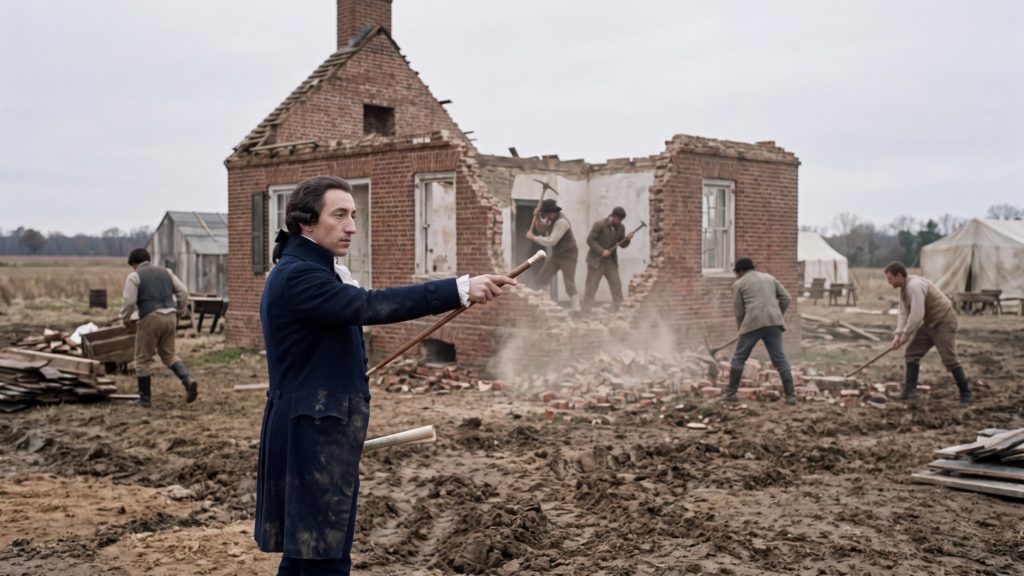
L'Enfant's plan for Washington, D.C. was deliberately grand: broad radiating avenues, ceremonial open spaces, and ornamental squares laid over a city that, in 1791, barely existed[7, p. 6]. He placed the Capitol and the President's House as the plan's two great anchors, connected by sweeping diagonal avenues cut across an ordinary street grid[3, p. 9]. But L'Enfant refused to compromise with the commissioners overseeing the project, at one point demolishing a house that stood in the way of one of his planned avenues without their authorization[7, p. 7]. His stubbornness cost him the job: he was dismissed in 1792, before construction had properly begun, and the surveyor Andrew Ellicott was brought in to revise and publish the plan in his place[3, p. 9].

L'Enfant spent the rest of his life trying, and failing, to get Congress to pay him for his work on the capital, dying in poverty despite his contribution to the city's design[8]. He died on 14 June 1825 at Green Hill, the Maryland estate of his friend William Dudley Digges, who had taken him in during his final years[9]. A later biographer titled his account of L'Enfant's career "the Unhonored and Unrewarded Engineer"[8] — a fair summary of how his own era treated him.
Although Andrew Ellicott's revised map, not L'Enfant's own manuscript, was what was actually published and built from, the plan Washington still follows today is fundamentally L'Enfant's: the diagonal avenues cutting across the grid, the ceremonial axis linking the Capitol and the President's House, and the open squares are all his design[3, p. 2]. In 1909, more than eighty years after his death, the United States formally recognized the debt: his remains were exhumed from Maryland and reburied with full honors at Arlington National Cemetery, on a hillside overlooking the very city he had designed[6].
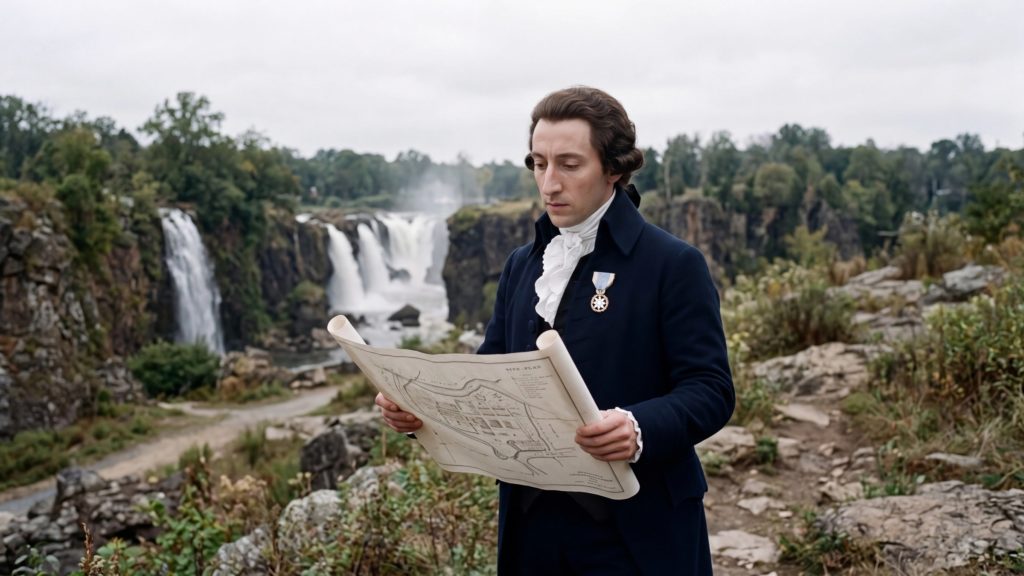
L'Enfant was, by most contemporary accounts, difficult to manage: proud, prickly, and unwilling to fully share his working drawings even with the commissioners meant to be overseeing him[3, p. 9]. He never married and left no direct heirs, and by the time he died his only real estate was the goodwill of the one friend, William Dudley Digges, who gave him a home for his last years[9].
Legacy & Reputation
What’s the verdict?
For much of the nineteenth century, L’Enfant was a minor, half-forgotten figure — his own plan was never fully published in his lifetime. Twentieth-century planners and historians reversed that verdict almost completely, crediting him as the true author of Washington’s distinctive form and treating Andrew Ellicott’s revisions as an editor’s work on someone else’s design, not a rival creation in its own right[3, p. 9]. The 1909 reburial at Arlington marks the moment that reassessment became official.
Myth-buster
Think you know this one?
The familiar version of the story credits L’Enfant with the entire street plan of Washington, D.C. exactly as it exists today. In fact, L’Enfant was fired in 1792 before his plan was finished, and it was his colleague Andrew Ellicott who revised, completed, and published the map that was actually built from[3, p. 9] — L’Enfant supplied the vision, but not the finished document.
Quick Facts
The essentials

Quick Facts
Roger would like you to know…
L'Enfant's father was a painter attached to the French royal tapestry works and a member of the Royal Academy in Paris[4] — young Pierre Charles grew up around the same design establishment he'd later put to use laying out an entire capital city.
Keith checked the sources…
Washington's street plan is often credited entirely to L'Enfant, but the map that was actually published and built from was a revision by the surveyor Andrew Ellicott, produced after L'Enfant had already been fired[3, p. 9].
History gets strange here…
L'Enfant once demolished a half-built house because it stood in the way of one of his planned avenues — without getting permission from the commissioners first[7, p. 7], which did not improve his working relationship with them.
The past has entered the chat…
Despite designing the capital of an entire nation, L'Enfant spent his last years unpaid and in poverty, dependent on the charity of a friend[8] — his biographer simply titled the book "the Unhonored and Unrewarded Engineer."
Roger has entered the historical rabbit hole…
In 1909, more than eighty years after he died all but forgotten in Maryland, L'Enfant's remains were exhumed and reburied with full honors at Arlington National Cemetery, on a hill overlooking the city he designed[6] — Roger considers this the single best posthumous career move in American history.
Keith would like to clarify…
L'Enfant wasn't only a city planner: he designed the actual eagle badge of the Society of the Cincinnati, the veterans' organization of former Continental Army officers he belonged to himself[6].
One for the Ageonauts…
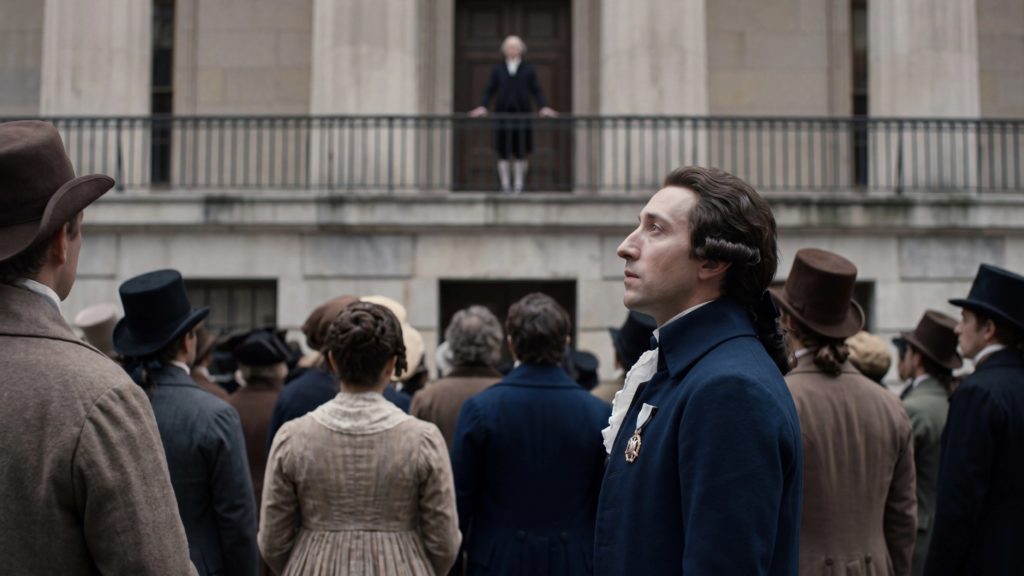
Before Washington, D.C. even existed, L'Enfant had already redesigned New York's old City Hall into Federal Hall, the building where George Washington was inaugurated as the first president[5].
Keith has spotted the footnote…
Even L'Enfant's birth year isn't perfectly settled: most sources agree on 1754, but at least one early reference gives 1755 instead[1] — a small reminder that even well-documented lives can have loose threads.
The map has become complicated…
L'Enfant's design deliberately paired grand, ceremonial boulevards with an ordinary practical street grid[7, p. 6] — the city was meant to look impressive on paper decades before it looked like much of anything in person.
Roger says, “Hear me out…”
L'Enfant crossed the Atlantic in 1776 as part of the same wave of enthusiasm that brought the Marquis de Lafayette to fight for American independence[5] — Roger maintains an entire generation of young Frenchmen basically ran away to join America the way other people ran away to join the circus.
the plan of the city having met universal applause
L'Enfant, in a surviving letter about his own design[10]
A rare moment of L'Enfant allowing himself some pride in the plan. The goodwill didn't last long — his relationship with the city's commissioners broke down within months, and he was dismissed from the project in 1792.
Timeline
How it unfolded
2 August 1754
Birth of Pierre Charles L'Enfant
The future designer of the plan of Washington was born in Paris, the son of a painter at the royal Gobelins manufactory.[10] Wikipedia gives the same date and places the birth in the Gobelins quarter.[11]
1777
L'Enfant Sails for America
A lieutenant in the French colonial troops aged twenty-three, L'Enfant sailed for America in 1777, according to Jusserand.[10] In the autumn of that year he offered his services as an engineer to the Continental Army, according to James Dudley Morgan's 1899 account.[8]
30 April 1789
Federal Hall Hosts Washington's Inauguration
L'Enfant's chief work in New York was the remodelling of the old City Hall to house Congress.[10] As Federal Hall it was the setting for the first inauguration of the first President, George Washington, on 30 April 1789.[10]
March 1791
Washington Sends L'Enfant to Survey the Federal City
President Washington told Colonel William Dickens of Georgetown on 2 March 1791 that an eminent French military engineer was on his way to examine and survey the site of the federal city.[10] L'Enfant arrived in Georgetown on 9 March.[11]
22 June 1791
L'Enfant Presents His First Plan for the Federal City
L'Enfant presented his first plan for the new capital to President Washington.[11] Andrew Ellicott's engraved map of the city later followed it closely, with several minor changes.[3, p. 9]
c. 1 March 1792
Washington Dismisses L'Enfant
Quarrelling with his superiors before his plans could be carried out, L'Enfant was dismissed from the service by President Washington.[1] Execution of the plan passed to his assistant Andrew Ellicott.[12, p. 91]
Dig Deeper
Copy any prompt below into your favourite AI chat to keep exploring.
L'Enfant's 1791 plan for Washington, DC
building a capital for a nation that wasn't there yet
the city designed to look powerful before the country was

Further Reading
Where to read more
Pierre Charles L'Enfant — Britannica
A short biography covering L'Enfant's training, his Revolutionary War service, his 1791 commission to design Washington, D.C., and his dismissal from the project the following year.
Why look at this: The quickest way to get L'Enfant's whole career — designer, soldier, and eventually forgotten pensioner — in one short read.
https://www.britannica.com/biography/Pierre-Charles-LEnfant“Major L'Enfant and the Federal City,” in With Americans of Past and Present Days
A full biographical chapter on L'Enfant by the French ambassador and historian J. J. Jusserand, drawing on L'Enfant's own surviving papers and correspondence.
Why look at this: A much fuller, more personal treatment than an encyclopedia entry, written by someone with direct access to L'Enfant's private letters.
https://www.gutenberg.org/files/39954/39954-h/39954-h.htmL'Enfant's 1791 Plan of the City of Washington — Library of Congress
The Library of Congress's digitized facsimile of L'Enfant's own original 1791 manuscript plan for the capital, held in its Geography and Map Division.
Why look at this: The actual document at the center of the whole story — L'Enfant's own drawing, not a later redrawing or summary of it.
https://www.loc.gov/item/88694210/Related
Keep exploring
People

Can be seen in
Where this shows up

References
Sources
Sources
- DocumentCatholic Encyclopedia (1913)/Pierre-Charles L'Enfant ↑
- WebsiteOriginal Plan of Washington, D.C. (George Mason University Digital History). Page 1. ↑
- WebsiteL'Enfant Plan of the City of Washington, District of Columbia - National Register of Historic Places Registration Form. Pages 2, 9. ↑
- BookWith Americans of past and present days by J. J. Jusserand ↑
- BookBrothers in arms : a new ed. of "With Americans of past and present days," with a new… by J. J. Jusserand ↑
- BookThe re-interment of Major Pierre Charles L'Enfant; report made to the Columbia historical society, May 11, 1909; by James Dudley Morgan and Columbia Historical Society ↑
- WebsiteHistorical Background on the Height of Buildings Act (Draft) - National Capital Planning Commission. Pages 6, 7. ↑
- BookMaj. Pierre Charles L'Enfant, the Unhonored and Unrewarded Engineer by James Dudley Morgan ↑
- BookThe Reinterment of Major Pierre Charles L'Enfant by James Dudley Morgan ↑
- BookWith Americans of Past and Present Days by J. J. Jusserand ↑
- Websiteen.wikipedia.org: Pierre Charles L'Enfant ↑
- BookWashington's southern tour, 1791 by Archibald Henderson. Page 91. ↑