
Gaul
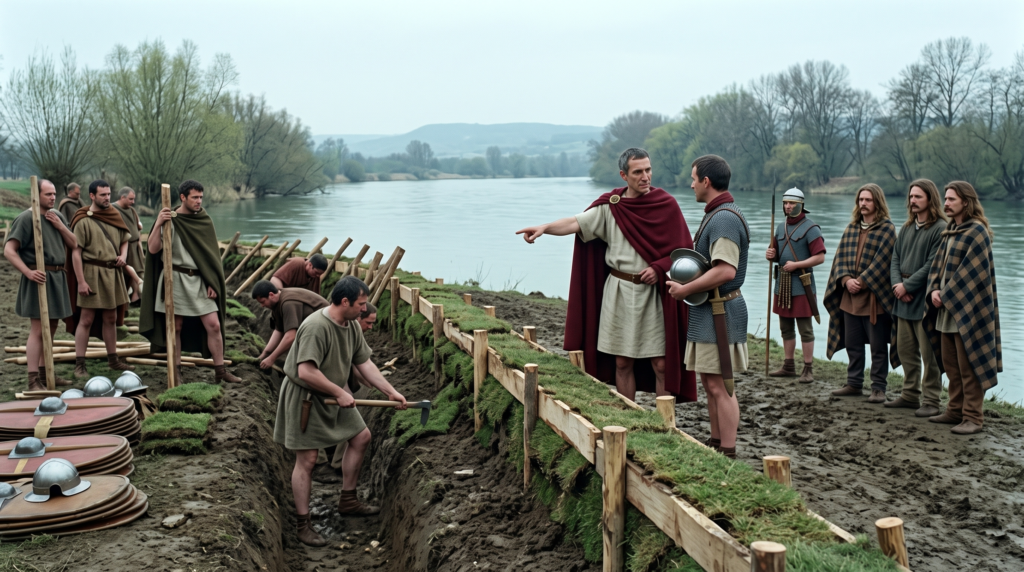
Gaul was the land Caesar conquered in the Gallic Wars of 58 to 50 BC, and the soldiers and wealth he drew from it carried him into civil war.[1][2][3]
About the Place
Why it matters
Gaul was the Roman name for a Celtic land far larger than modern France.[4, p. 1][2] Caesar opens his account by dividing it into three parts, held by the Belgae, the Aquitani and the Celts.[5] These peoples differed in language, customs and laws.[5] Gauls had also settled in northern Italy, which the Romans called Cisalpine Gaul, meaning Gaul on their side of the Alps.[2] Britannica says the Gauls plundered Rome itself in 390 BC, a humiliation that helped inspire the Roman drive to conquer Gaul.[2]
Rome took Gaul in several steps. By 181 BC it had subjugated and colonised Cisalpine Gaul in northern Italy.[2] Britannica says Rome won control of the Rhone valley after 120 BC and founded the colony of Narbo Martius, modern Narbonne, in 118 BC.[2] Mommsen quotes a description from about ten years before Caesar arrived that called the old province full of merchants and Roman citizens.[6] In 58 BC Caesar was assigned Cisalpine Gaul and Illyricum for five years, and Transalpine Gaul was added to his command.[7][8]
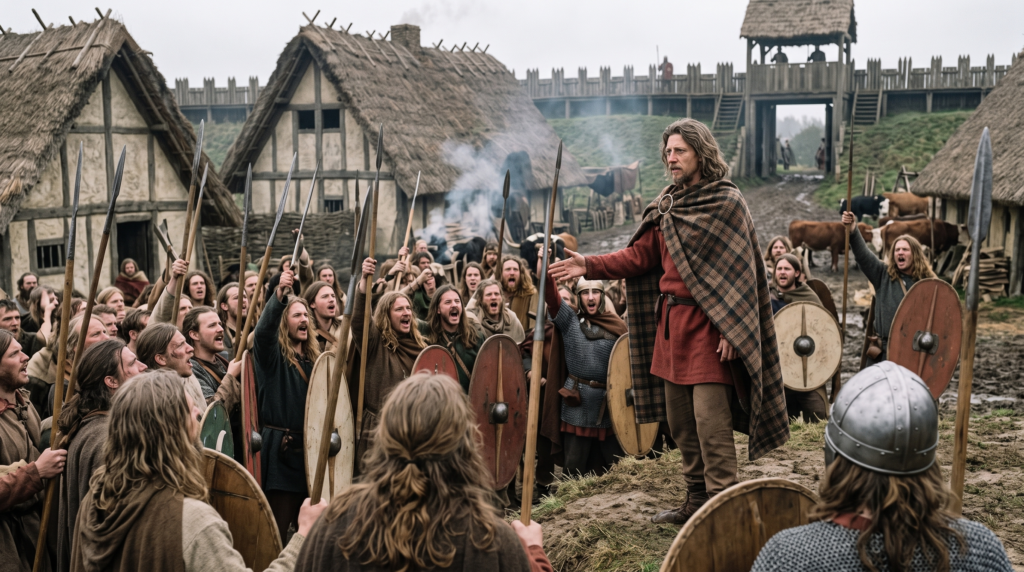
Britannica dates the Gallic Wars to 58 to 50 BC.[1] Caesar began by fighting the Helvetii and Ariovistus, then moved against the Belgae in the north.[9] In 52 BC the Gauls chose Vercingetorix as their leader.[9] His defeat at the siege of Alesia that year ended Gallic resistance.[10] Mommsen counted eight years of conflict in all.[6] In January 49 BC Caesar crossed the Rubicon, the river between his province of Cisalpine Gaul and Italy, and called up his legions in Gaul.[11]
Britannica says Caesar treated the Gauls generously, leaving their cities some autonomy, and so secured the loyalty of Gallic soldiers in his civil wars.[2] Augustus later organised the provinces, adding Aquitania, Belgica and Lugdunensis to the old province of Narbonensis.[12] Lugdunum, modern Lyon, became the capital of Roman Gaul.[2] Britannica says Rome had lost control by the early 6th century, when the Frankish Merovingians arose.[2] Napoleon III began excavating Alesia, above Alise-Sainte-Reine, in 1861.[13][10] Many Roman amphitheatres and aqueducts in Gaul still stand.[2]
Legacy & Reputation
What’s the verdict?
Plutarch judged that Caesar surpassed other Roman generals in the extent of country he acquired and the multitude of enemies he beat.[3] Mommsen wrote that Alesia decided the fate of the Celtic nation.[6] Ferrero argued that fears of a Helvetian conquest of all Gaul were much exaggerated.[14] Camille Jullian wrote that Roman Gaul repaid the state a hundredfold.[15, p. 244]
Myth-buster
Think you know this one?
Quick Facts
The essentials
Quick Facts
Keith has inspected the famous opening line
Caesar divides Gaul into Belgae, Aquitani and Celts. Holmes noted the grouping was not scientifically complete, since a Celtic tribe, the Carnutes, was a client of the Belgic Remi, but it was good enough for Caesar's narrative.[4, p. 1]
Roger has noticed that the Gauls reached Rome first
Long before Caesar crossed the Alps, the Gauls had come the other way. Britannica says they plundered Rome in 390 BC, and Trollope adds that the Romans bought them off with a ransom.[2][7]
Keith followed the money
Plutarch reports that Caesar sent his Gallic wealth flowing to Rome's politicians. He paid off the tribune Curio's debts and gave the consul Paulus fifteen hundred talents, which helped pay for a famous basilica in the Forum.[3]
File under: grim endings
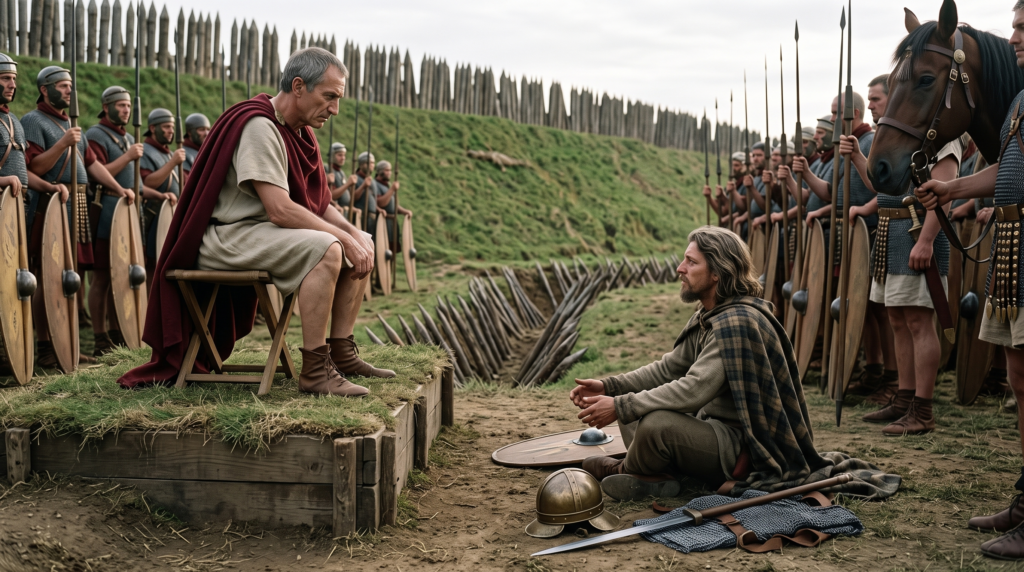
Vercingetorix told his council he had fought for the common freedom and offered his life or his surrender. Weigall writes that he was held prisoner for six years, then executed at the close of Caesar's triumph in Rome.[9, p. 201][17, p. 61]
Roger insists the numbers matter here
Caesar's own account gives the relief army marching to Alesia as eight thousand horse and 240,000 foot. Trollope adds that, with that army still on the march, the men and women inside Alesia were starving.[7]
Keith has found the railway timetable
George Long wrote in the 1860s that the site of Alesia is certain: Alise-Sainte-Reine, on Mont Auxois. He said anyone approaching from Les Laumes station, having read Caesar's description, will recognise the place as soon as they see it.[18]
Roger would like you to know the Rubicon was once Gaul's border
Caesar's province of Cisalpine Gaul ended at the little river Rubicon. Weigall relates that as Caesar crossed it into Italy in January 49 BC, he exclaimed, "The die is cast!", and set his face towards Rome.[11]
Meanwhile, in the old province
Mommsen quotes a description written about ten years before Caesar arrived: the province of Gaul was full of merchants and swarmed with Roman citizens, and no Gaul did business without a Roman.[6]
One for the Ageonauts: Lyon began as a Roman city
Godwin says the governor Minutius Plancus founded Lugdunum, now Lyons, in 43 BC where the Rhone and Saone meet. He calls it the first Roman city in long-haired Gaul.[12]
All Gaul is divided into three parts, one of which the Belgae inhabit, the Aquitani another, those who in their own language are called Celts, in ours Gauls, the third.
Julius Caesar
Caesar's opening sentence of his account of the Gallic War, in an English translation.[5]
Timeline
How it unfolded
c. 390 BC
Gauls sack Rome
Britannica dates the Gauls' seizure and plundering of Rome to 390 BC, a humiliation that helped to inspire the Romans' drive to conquer Gaul.[2]
by 181 BC
Rome subjugates Cisalpine Gaul
Britannica says that by 181 BC Rome had subjugated and colonised Cisalpine Gaul, the part of Italy occupied by the Gauls, which the Romans called Gaul this side of the Alps.[2]
118 BC
Narbo Martius founded
Rome gained control of the Rhone valley after 120 BC, and the colony of Narbo Martius (Narbonne) was founded on the coast in 118 BC, according to Britannica. The southern province became known as Gallia Narbonensis.[2]
58 BC
Caesar takes command in Gaul
In 58 BC Caesar was assigned Cisalpine Gaul and Illyricum for five years, with Transalpine Gaul added, and he went north that spring to take charge.[7][8] Britannica dates the Gallic Wars to 58 to 50 BC.[1]
52 BC
Siege of Alesia
The Gauls chose Vercingetorix as their leader in 52 BC, according to the contents of the Loeb edition of Caesar's Gallic War.[9] Britannica says his siege and capture at Alesia that year ended Gallic resistance to Caesar.[10]
January 49 BC
Caesar summons his legions from Gaul
Weigall says that in the middle of January 49 BC Caesar sent orders to his legions in Gaul to come to his support.[11] Britannica says his generous treatment of the Gauls secured the allegiance of Gallic soldiers in his civil wars against Pompey.[2]
27 BC
Augustus organises the Gallic provinces
Taylor wrote that in 27 BC Augustus went to Gaul and thoroughly organised the provinces won by Julius Caesar.[19] Godwin names three provinces, Aquitania, Belgica and Lugdunensis, alongside the old Narbonensis.[12]
Early 6th century AD
Roman control of Gaul ends
Britannica says that by the time the Frankish Merovingians arose in the early 6th century, the Romans had lost control of Gaul.[2]
Dig Deeper
Copy any prompt below into your favourite AI chat to keep exploring.
Explain how Caesar conquered a land as large as Gaul, and why the siege of Alesia and the surrender of Vercingetorix proved decisive.
Debate whether conquering Gaul made Caesar's clash with the Senate inevitable, or whether it only mattered because of how he used the army and wealth he won there.
Roleplay Caesar writing up the Gallic War for his fans back in Rome, and make every invasion sound strictly defensive.
Further Reading
Where to read more
Gaul - World History Encyclopedia
A free encyclopaedia article on the Celtic lands of Gaul, with a timeline running from the Gallic sack of Rome around 390 BCE to Caesar's conquest and the later Roman province.
Why look at this: Its timeline puts Caesar's invasion of 58 BCE in context, from the earlier Roman takeover of Cisalpine Gaul and Narbonensis to Vercingetorix's victory at Gergovia and his surrender after the siege of Alesia in 52 BCE.
https://www.worldhistory.org/gaul/Caesar's Gallic Wars: 58-50 BC - Kate Gilliver, Osprey Publishing (Bloomsbury), 2024
The publisher's catalogue page for a 144-page illustrated history of Caesar's campaigns in Gaul by the Roman military historian Kate Gilliver, drawing on Caesar's own commentaries.
Why look at this: Treats the conquest of Gaul as part of the collapse of the Roman Republic, showing how the war Caesar fought from 58 BC set up his slide towards civil war with the Senate and Pompey.
https://www.ospreypublishing.com/uk/caesars-gallic-wars-9781472862013/Julius Caesar, Gallic War, Book 7, chapter 89 (the surrender of Vercingetorix) - McDevitte and Bohn translation (1869), Scaife Viewer, Perseus Digital Library, Tufts University
Caesar's own account of the Gallic War in a free English translation, with the Latin edition alongside, on the Perseus Digital Library's Scaife Viewer. This link opens the passage that closes the siege of Alesia.
Why look at this: Shows how Caesar himself recorded the end of the siege of Alesia in 52 BC: Vercingetorix offering himself for the common freedom of Gaul, the chieftains brought out before Caesar, and a captive given to each soldier as plunder.
https://scaife.perseus.org/reader/urn:cts:latinLit:phi0448.phi001.perseus-eng2:7.89/Related
Keep exploring
People
Places
Can be seen in
Where this shows up

References
Sources
Sources
- Websitebritannica.com: Gallic Wars ↑
- Websitebritannica.com: Gaul ancient region Europe ↑
- BookPlutarch Lives vol 7: Demosthenes, Cicero, Alexander, Caesar (Loeb, Perrin) by Plutarch ↑
- BookCaesar's conquest of Gaul. An historical narrative (being part I of the larger work on the same subject) by T. Rice Holmes. Page 1. ↑
- Book"De Bello Gallico" and Other Commentaries by Julius Caesar ↑
- BookThe History of Rome (Volumes 1-5) by Theodor Mommsen ↑
- BookThe Commentaries of Cæsar by Anthony Trollope ↑
- BookA history and description of Roman political institutions by Frank Frost Abbott ↑
- BookGallic war [Loeb 72] by Gaius Iulius Caesar and Henry John Edwards. Page 201. ↑
- Websitebritannica.com: Place / Alesia ↑
- BookTHE LIFE AND TIMES OF MARC ANTONY by ARTHUR WEIGALL ↑
- BookThe history of France, Vol. 1. (Ancient Gaul) by Parke Godwin ↑
- BookThe comedy and tragedy of the Second Empire : Paris Society in the sixties; including letters of Napoleon… by Edward Legge ↑
- BookThe greatness and decline of Rome by Guglielmo Ferrero, Alfred Eckhard Zimmern and H. J. Chaytor ↑
- WebsiteCamille Jullian, Histoire de la Gaule, tome VIII Les empereurs de Treves II - La terre et les…. Page 244. ↑
- Websiteencyclopedia.com: Ancient history rome / gaul ↑
- BookThe life and times of Cleopatra, queen of Egypt; a study in the origin of the Roman empire by Arthur E. P. Brome Weigall. Page 61. ↑
- BookThe decline of the Roman republic by George Long ↑
- BookA constitutional and political history of Rome, from the earliest times to the reign of Domitian by T. M. Taylor ↑