
Blucher outside his tent on campaign, the aggressive Prussian field marshal his soldiers called 'Marshal Forwards'.
Prussian Field Marshal
A cavalry officer once told by Frederick the Great's own hand that he had "leave to resign, and may go to the devil"[1, p. 433] later returned to lead the Prussian army that arrived at Waterloo in time to help finish Napoleon for good.
Bio
Who they were
Gebhard Leberecht von Blücher was born at Rostock in 1742[2], and began his military career while still in his teens[3]. The library's sources do not give enough detail to confirm the precise circumstances of his earliest service with confidence, beyond that it began very young.
By the time of Frederick the Great's reign, Blücher was serving as a Prussian officer, but his career nearly ended early: passed over for a promotion, he wrote an intemperate letter of protest and was curtly told by Frederick that "Captain von Blücher has leave to resign, and may go to the devil as soon as he pleases"[1, p. 433]. He left active service for a period afterward before eventually returning to it, going on to serve through the wars against Revolutionary and then Napoleonic France, rising steadily through the Prussian cavalry.
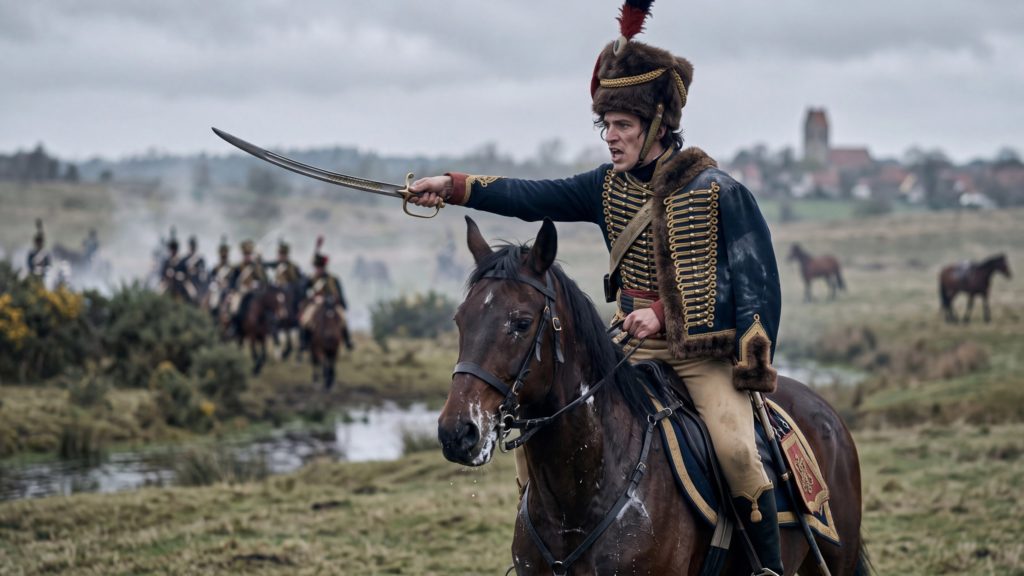
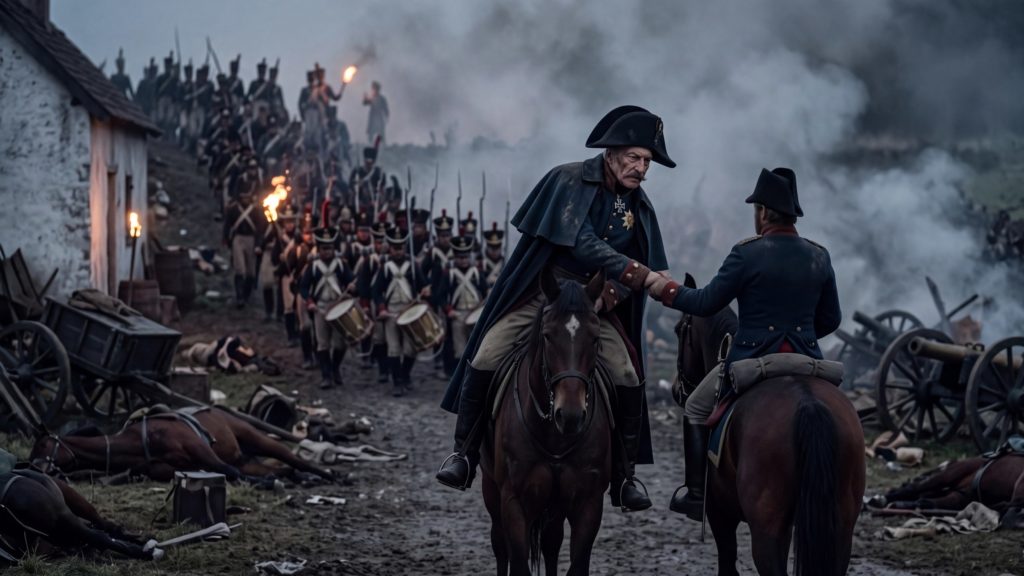
Blücher's defining campaign came in 1815. At the Battle of Ligny in June, his Prussian army suffered a defeat at Napoleon's hands[4, p. 99][2]. Rather than retreating away from the fighting, Blücher regrouped and marched his army to support the Duke of Wellington at Waterloo, arriving in time to help turn the battle decisively against Napoleon. After the victory, Wellington and Blücher met and shook hands at the farm of La Belle Alliance[5, p. 201][6, p. 199], a meeting later commemorated in paintings and prints. His soldiers had already nicknamed him "Marshal Vorwärts" ("Marshal Forward") for his relentless drive to attack[7, p. 11].
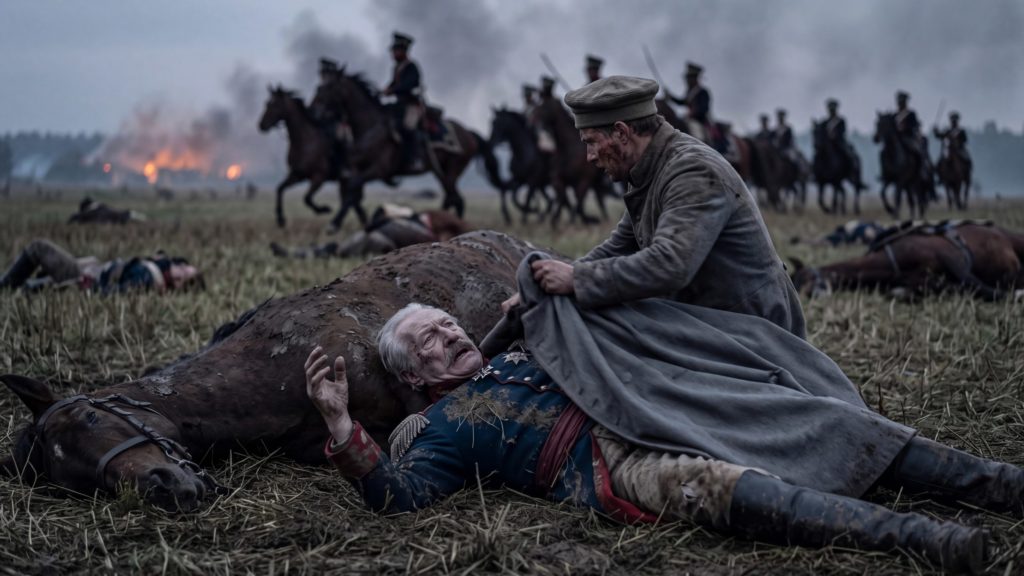
Blücher died on 12 September 1819 at Krieblowitz, aged seventy-seven[2]. He had by then been honored as Prince Blücher von Wahlstadt[8], a title reflecting his standing as one of the most celebrated Prussian commanders of the Napoleonic Wars. His death came four years after his best-remembered campaign, with his reputation as Waterloo's decisive reinforcement already secure.
Blücher's forced march to Waterloo in 1815 is remembered as one of the turning points of the battle, and his soldiers' nickname for him, "Marshal Vorwärts"[7, p. 11], captures the aggressive, always-attacking reputation that defined his command style across decades of Prussian military service. His partnership with Wellington at Waterloo, sealed with their meeting at La Belle Alliance[5, p. 201], is still cited as a model of allied cooperation deciding a single, war-ending battle.
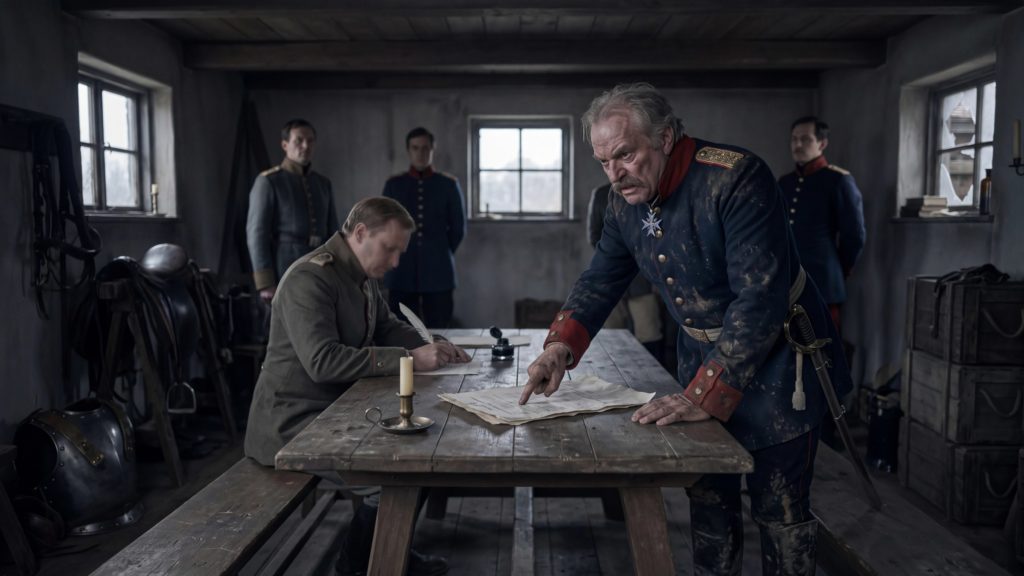
Long before he was a celebrated field marshal, Blücher was nearly finished as a soldier: a testy exchange over a denied promotion earned him a curt dismissal letter from Frederick the Great himself, telling him he could resign and "go to the devil as soon as he pleases"[1, p. 433] — a bruising start for a man who decades later would help end Napoleon's career for good.
Legacy & Reputation
What’s the verdict?
Accounts of the 1815 campaign, including lecture-based studies of Waterloo[7, p. 11], consistently credit Blücher’s decision to march to Wellington’s aid after the defeat at Ligny as decisive to the outcome at Waterloo, framing him as an essential rather than secondary figure in Napoleon’s final defeat.
Myth-buster
Think you know this one?
Myth: Blücher is sometimes remembered simply as Wellington’s late-arriving backup at Waterloo. Correction: his army had already fought and lost a hard battle against Napoleon at Ligny just two days earlier[4, p. 99], and his decision to regroup and march to Wellington’s support, rather than retreat, was what made his arrival at Waterloo possible at all.
Quick Facts
The essentials
Quick Facts
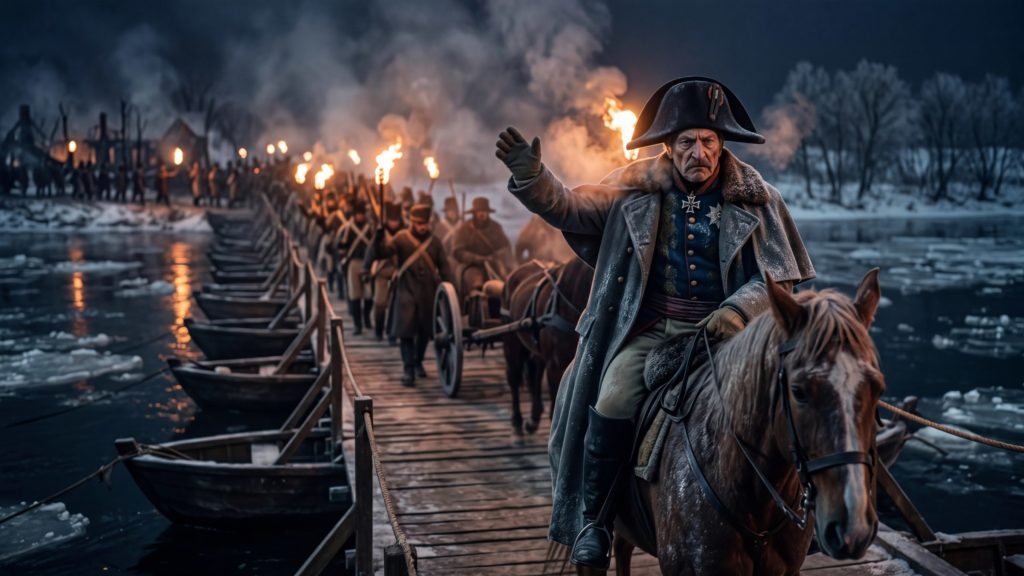
History gets strange here…
Blücher's own troops nicknamed him "Marschall Vorwärts" — Marshal Forward — for his relentless, headlong style of attack, a habit that stuck so firmly the Prussians also called him "Alte Vorwärts," Old Forwards, well into old age[9].
Roger has a theory…
Popular retellings say that in 1815, Blücher once solemnly told the Duke of Wellington he believed he was pregnant with an elephant. It's usually told as evidence of a genuine breakdown — though it may equally have started life as a very literal translation of a German joke about a splitting headache.
Keith checked the sources…
On the exhausting march to Waterloo, with guns sinking axle-deep in mud, Blücher's own soldiers began protesting they couldn't go on. "But we must get on!" he told them. "I have given my word to Wellington, and you will surely not make me break it"[10, p. 1].
One for the Ageonauts…
Blücher was seventy-two years old at Waterloo, and two days earlier at Ligny he had his horse shot from under him while covering the Prussian retreat — a fall that would floor a soldier a third his age[11].
Roger would like you to know…
Napoleon's plan for 18 June 1815 was audacious even by his standards: attack Wellington and Blücher, two separate armies, on the very same day. It very nearly worked — right up until Blücher kept the promise he'd made about getting his men there in time[12, p. 68].
Keith found the footnote…
The order for Marshal Grouchy to turn back and crush Blücher's rearguard reached him at seven in the evening — by which point, as one historian drily notes, the Battle of Waterloo was "already past redemption." Some messages just arrive too late to matter[10, p. 1].
A small fact with a very large consequence…
At Ligny on 16 June 1815, a single Prussian brigade under General Steinmetz lost forty-six officers and twenty-three hundred men in one assault before falling back. Two days later, those same battered Prussians were marching to save Wellington at Waterloo[10, p. 64].
The past has entered the chat…
Not every Waterloo casualty was on the losing side: General Letort, colonel of Napoleon's own Guard Dragoons, was mortally wounded leading a cavalry charge against Prussian infantry in the campaign's opening clashes, days before the battle everyone remembers[12, p. 67].
Keith remains unconvinced…
Prussian troops apparently used "Alte Vorwärts" — Old Forwards — as a term of real affection, not mockery, for a commander well past seventy who still insisted on leading from the front. Keith remains unconvinced modern generals would get away with it[9].
Roger has entered the historical rabbit hole…
Once his infantry and Bülow's cavalry reached the Wood of Paris near Plancenoit, Blücher pushed his exhausted troops into the fight anyway — committing what he had on hand rather than waiting for the rest, and turning the battle's final hour against Napoleon[10, p. 1].
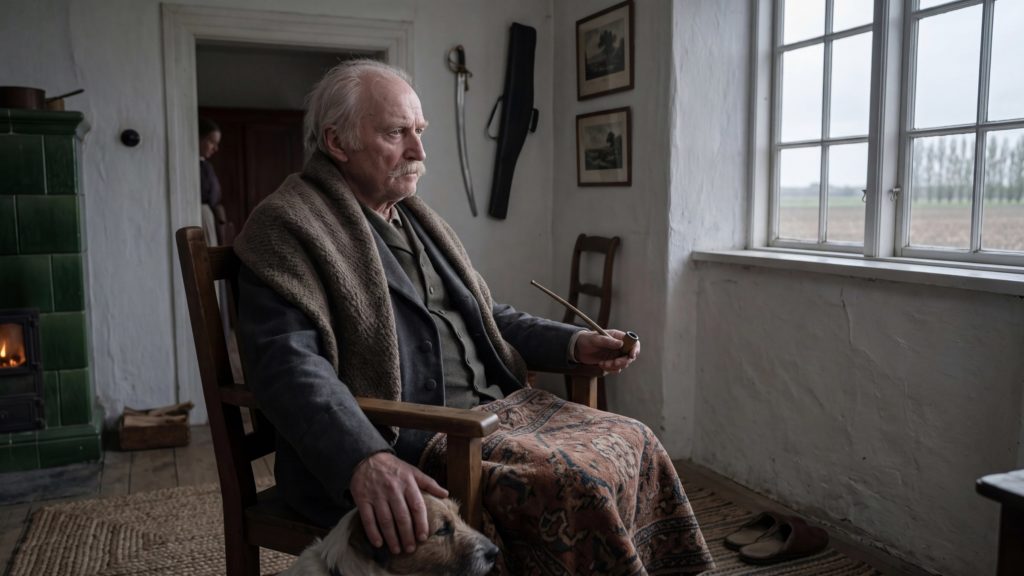
Was für Plunder!
Gebhard Leberecht von Blücher
Blücher's blunt reaction on first seeing London in June 1814 -- German for "what rubbish!" -- a gruff soldier's verdict later garbled in English retellings into the more dramatic (but inaccurate) "what a place to plunder."
Timeline
How it unfolded
16 December 1742
Birth of Gebhard Leberecht von Blücher
Blücher was born at Rostock and entered Swedish service in his fourteenth year, but was taken prisoner by the Prussians in the Pomeranian campaign of 1760 and was persuaded to enter the Prussian service.[13]
7 November 1806
Surrender at Ratkau
After commanding the rearguard in the disastrous Prussian campaign of 1806 and fighting a series of combats near Lübeck, Blücher was forced to surrender at Ratkau, his capitulation citing want of provisions and ammunition.[13]
16 October 1813
Made field marshal at Möckern
Commanding the Army of Silesia in the autumn campaign of the War of Liberation, Blücher was made a general field marshal on the day of his victory over Marmont at Möckern, which led the way to the overthrow of Napoleon at Leipzig.[13]
3 June 1814
Created Prince of Wahlstatt
Following the entry of the allies into Paris and the overthrow of the First Empire, Blücher was made prince of Wahlstatt on 3 June 1814, taking his title from the Katzbach battlefield in Silesia.[13]
16 June 1815
Defeat at Ligny
In the campaign of 1815 the Prussians under Blücher suffered a very severe defeat at Ligny, where the old field marshal was ridden over by cavalry charges and saved only by the devotion of his aide-de-camp, Count Nostitz.[13]
18 June 1815
Prussian intervention at Waterloo
After an incredibly severe march, Blücher's army intervened with decisive and crushing effect in the battle of Waterloo, fought on the 18th two days after Ligny.[13][14] Near La Belle Alliance he and Wellington accidentally met and congratulated each other on their joint success.[15]
12 September 1819
Death of Prince Blücher
His age and infirmities compelled him to retire to his Silesian residence at Krieblowitz, where he died on 12 September 1819, aged seventy-seven.[13]
Dig Deeper
Copy any prompt below into your favourite AI chat to keep exploring.
Explain how Blücher's Prussian army arrived at Waterloo in the late afternoon and turned the battle decisively against Napoleon.
What does Blücher's decision to march to Wellington's aid, just two days after losing at Ligny, say about resilience deciding history as much as strategy does?
Roleplay Blücher marching his exhausted army through the mud, muttering about being fashionably late to the most important party in Europe.
Further Reading
Where to read more
Gebhard Leberecht von Blücher, Fürst von Wahlstatt | Prussian Field Marshal, Napoleonic Wars, Battle of Waterloo
Britannica's overview of Blücher's military career, from his capture as a young Swedish cavalryman through his command of the Prussian forces that helped defeat Napoleon at Waterloo.
Why look at this: Explains how, despite defeat and injury at the Battle of Ligny on 16 June 1815, Blücher led his forces to Waterloo two days later, his timely arrival turning a stalemate into a French rout.
https://www.britannica.com/biography/Gebhard-Leberecht-von-Blucher-Furst-von-WahlstattBlücher: Scourge of Napoleon (Michael V. Leggiere)
The first major English-language scholarly biography of Blücher, published by the University of Oklahoma Press, drawing on his personal writings to portray a shrewder strategist than his reckless reputation suggests.
Why look at this: Interrogates his famous nickname 'Marshal Forward' directly - the book argues that, in fact, he 'retreated more often than he attacked,' complicating the popular image of him as a pure headlong attacker.
https://www.oupress.com/9780806164663/blucher/The Life and Campaigns of Field-Marshal Prince Blücher, of Wahlstatt (1815)
A firsthand biography written by August von Gneisenau, Blücher's own chief of staff from 1813 through the Waterloo campaign, long regarded as one of the most valuable primary sources for this phase of the Napoleonic Wars.
Why look at this: Written by the man who stood at Blücher's side through Ligny and Waterloo, preserving details of their command partnership - including the decision to march to Wellington's aid - that no outside historian could observe firsthand.
https://archive.org/details/lifeandcampaign00marsgoogRelated
Keep exploring
Events
Can be seen in
Where this shows up

References
Sources
Sources
- BookThe Victories of Wellington and the British Armies by W. H. Maxwell. Page 433. ↑
- DocumentEncyclopædia Britannica, Ninth Edition/Blücher, Gebhard Leberecht von ↑
- BookBlücher and the uprising of Prussia against Napoleon, 1806-1815 by Ernest F. Henderson ↑
- BookThe campaign of 1815, chiefly in Flanders by Walter Haweis James. Page 99. ↑
- BookA Voice from Waterloo by Edward Cotton. Page 201. ↑
- BookA Voice from Waterloo by Edward Cotton. Page 199. ↑
- BookWaterloo lectures: a study of the campaign of 1815 by Charles Cornwallis Chesney. Page 11. ↑
- BookThe Waterloo Campaign, 1815 by William Siborne ↑
- Websitenapoleon.org: Blucher von wahlstadt generalfeldmarschall gebhard leberecht furst wahlstatt 1742 1819 ↑
- BookQuatre-Bras, Ligny and Waterloo; a narrative of the campaign in Belgium, 1815 by Dorsey Gardner. Pages 1, 64. ↑
- Websitebritannica.com: Gebhard Leberecht von Blucher Furst von Wahlstatt ↑
- BookThe battle of Waterloo; or, a faithful and interesting history of the unparalleled events connected therewith; from the…. Pages 67, 68. ↑
- Document1911 Encyclopædia Britannica/Blücher, Gebhard Leberecht von ↑
- BookNapoleon and the end of the French revolution by Charles F. Warwick ↑
- BookA full and circumstantial account of the memorable battle of Waterloo: the second restoration of Louis XVIII; and… by Christopher Kelly ↑