
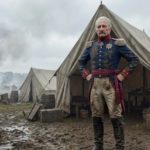
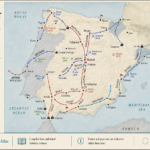
Wellington sits apart from the gold-laced staff poring over a map of the Peninsula, the theatre where six years of campaigning drove the French from Spain.
British General and Prime Minister
The younger son of an Anglo-Irish family who purchased his first army commission almost as a fallback career, then went on to out-general Napoleon's marshals in Spain and Napoleon himself at Waterloo.[1, p. 9]
Bio
Who they were
Arthur Wesley (the family name later respelled Wellesley) was born in Dublin, with sources placing his birth around late April or 1 May 1769[2][3, p. 0] — even his exact birthday is disputed in period accounts. He was a younger son of Garret Wesley, Earl of Mornington[4], an aristocratic Anglo-Irish family with a title but no great fortune. His family sent him to a military academy at Angers, in France[5, p. 125], to prepare him for an army career.
Wellesley's military career began conventionally: he received an ensign's commission in the 73rd Regiment of Foot in March 1787[2], the standard way a young gentleman entered the British Army at the time. Real advancement came through service in India, where his elder brother Richard, Governor-General of India, gave him growing responsibility. Wellesley distinguished himself at the siege of Seringapatam in 1799[3, p. 115], which broke the power of the ruler Tipu Sultan, and then more dramatically at the Battle of Assaye in 1803[6], a decisive victory against a much larger Maratha force that first established his reputation as a formidable field commander.
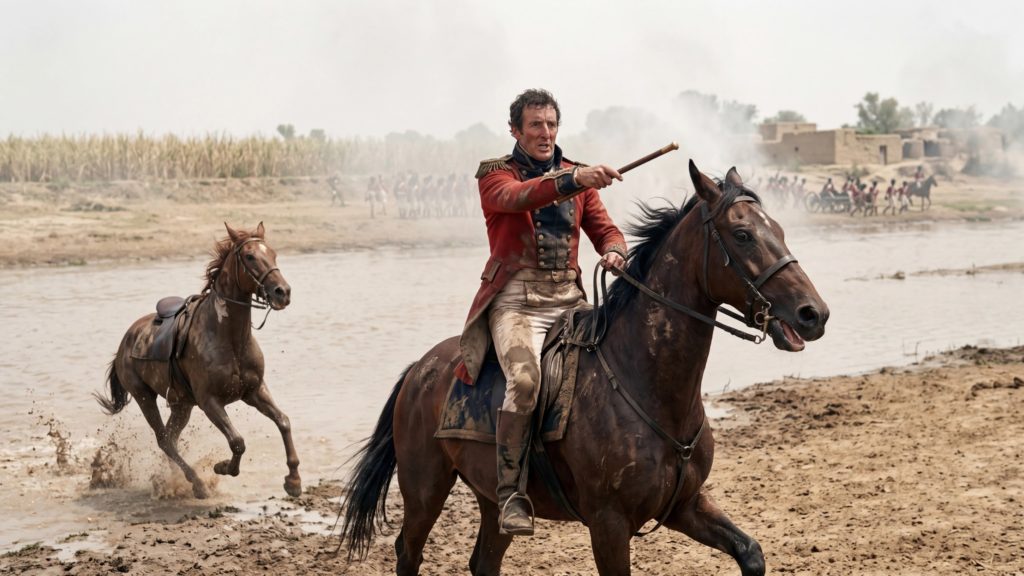
Wellesley's defining campaigns came in Europe. Commanding British and allied forces in the Peninsular War in Spain and Portugal[7, p. 128], he fought a long campaign against Napoleon's marshals, including the decisive Battle of Salamanca[8], steadily wearing down French control of the Iberian peninsula. After Napoleon's first abdication he was created Duke of Wellington[9, p. 1]. When Napoleon escaped exile and returned to power in 1815, Wellington commanded the allied army that met him at the Battle of Waterloo on 18 June 1815[1, p. 9]; the arrival of Prussian forces late in the day was crucial in turning the battle decisively against Napoleon[10, p. 12], who abdicated for the final time days later[11].
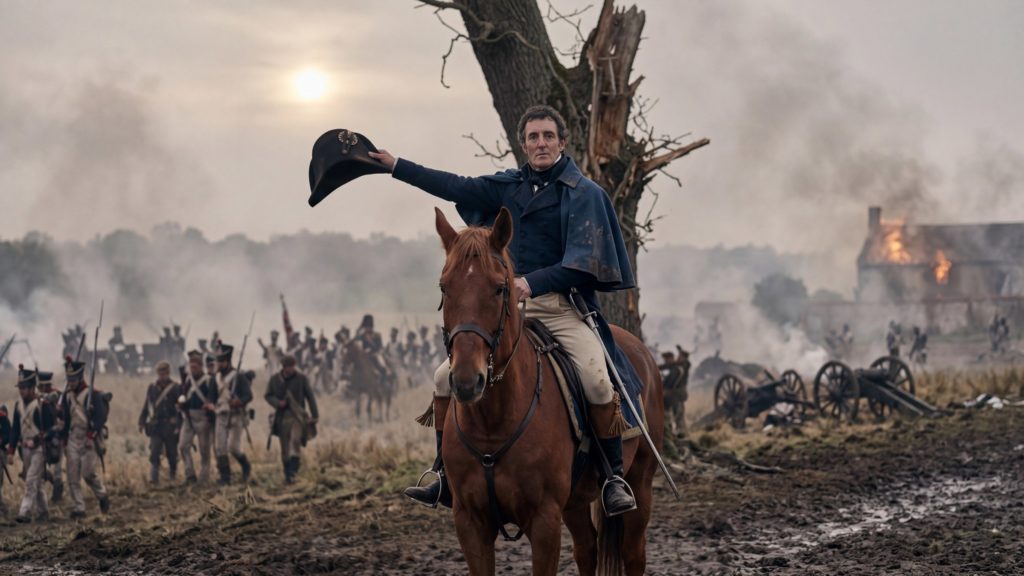
After Waterloo, Wellington became a leading figure in British public life, eventually serving as Prime Minister from January 1828[12, p. 1826]. His time in politics was more divisive than his military career; opposition to parliamentary reform made him unpopular at times, even as his war record kept him widely respected. He died at Walmer Castle in Kent on 14 September 1852[13] and was given a state funeral, buried at St Paul's Cathedral[13], near Nelson, the other great military hero of the Napoleonic Wars.
Wellington's victory at Waterloo ended more than a decade of near-continuous European war and permanently closed the door on Napoleon's return to power, reshaping the continent's borders for a generation. His cautious, methodical style of generalship — famously said to view a "battle won" with almost the same gravity as a "battle lost"[14, p. 53] — influenced military thinking long after his death. His decades in British politics, including as Prime Minister, meant his influence stretched well past 1815, making him one of the few commanders remembered as equally significant in war and in peacetime government.
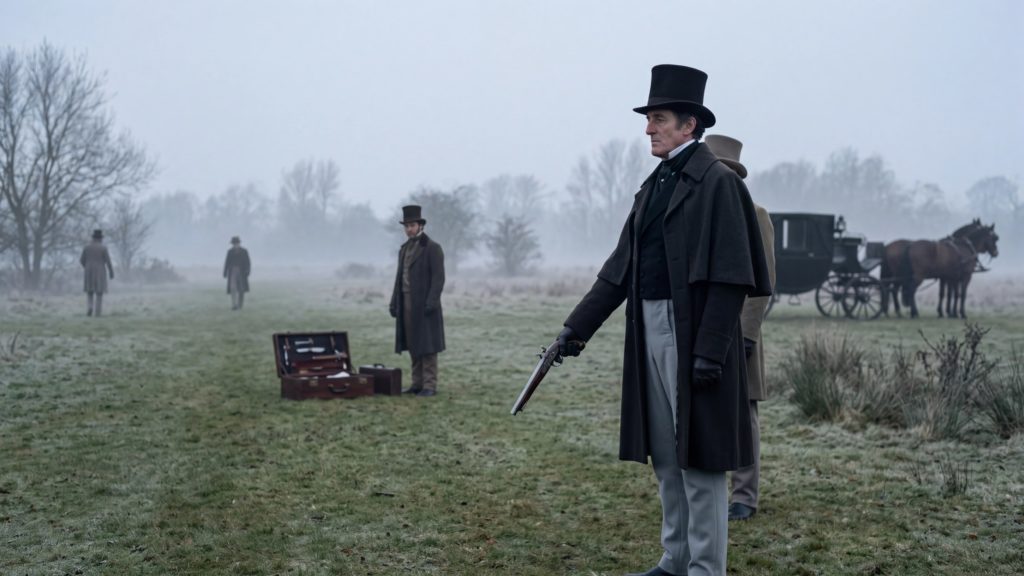
Wellington earned the nickname "the Iron Duke" only after Waterloo[15], a title that stuck for the rest of his life and after — yet the man behind it was famously wary of celebrating victory. He once remarked that nothing except a battle lost could be half so melancholy as a battle won[16, p. 53], a strikingly grim reflection from Britain's most famous soldier.
Legacy & Reputation
What’s the verdict?
Wellington’s standing was never simple. The commander at Waterloo was also a firm opponent of constitutional and commercial reform, and his biographer Charles Duke Yonge noted that his detractors chiefly rested their low estimate of his statesmanship on that opposition[15]. In 1831 a Reform mob shattered the windows of Apsley House, and a 1913 biographer remarked that if soldiers were ever canonised, Wellington’s halo would be made of steel[17].
Myth-buster
Think you know this one?
Wellington is often remembered as having won Waterloo single-handedly. In reality, the timely arrival of Prussian forces late in the battle was crucial to turning the fighting decisively against Napoleon[10, p. 12]; Waterloo was an allied victory, not a solely British one.
Quick Facts
The essentials
Quick Facts
Roger would like you to know…
Wellington wasn't born Wellesley — his family's name was originally spelled Wesley, and it was later changed to the grander-looking Wellesley[17, p. 17]. A few extra letters, considerably more gravitas.
Keith checked the sources…
Winning Waterloo wasn't the end of Wellington's career — in January 1828 he became Prime Minister of the United Kingdom[12, p. 1826]. Not every general successfully swaps the battlefield for Parliament, but he managed it.
One for the Ageonauts…
The Wellington boot is named after him for good reason: his shoemaker, George Hoby, redesigned the old Hessian riding boot at his request, cutting it lower and losing the tassel so it worked with the new fashion for trousers[18]. Two centuries on, it mostly meets mud instead of muskets.
Keith would like to clarify…
The nickname 'Iron Duke' is popularly traced to iron shutters Wellington had fitted to Apsley House after rioters smashed its windows during the 1832 Reform Bill unrest[19]. He reportedly left the broken glass unrepaired for a while first, on principle[1].
History gets strange here…
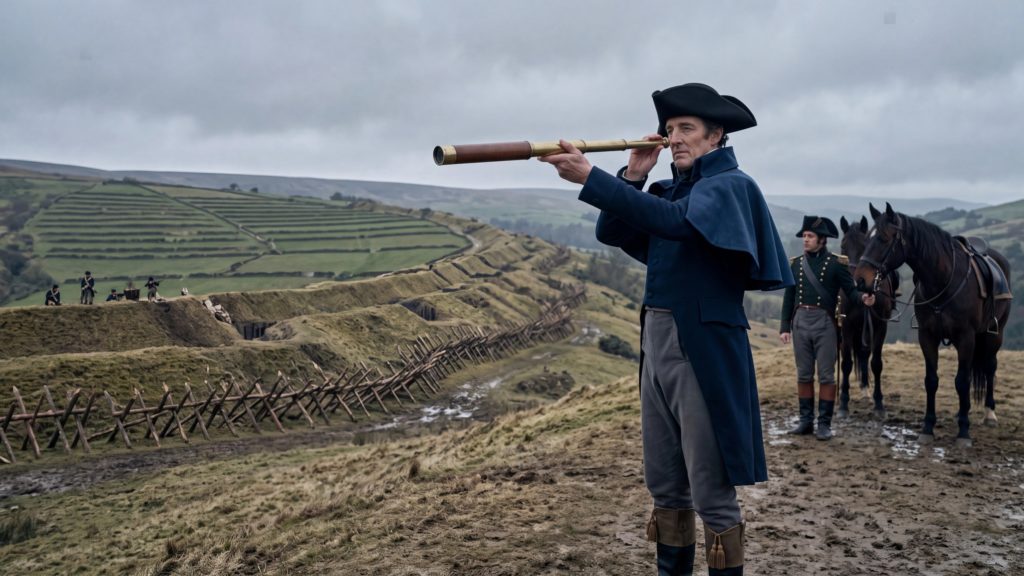
During the Peninsular War, Wellington had his engineers secretly build the Lines of Torres Vedras — a network of forts and earthworks outside Lisbon so effective that the advancing French army took one look and starved rather than attack[11].
Roger has a theory…
At Waterloo, Wellington rode the same horse, Copenhagen, for the entire eighteen-hour battle without changing mounts once[16, p. 70]. Considering the day involved cannon fire, cavalry charges and one collapsing empire, that is a genuinely remarkable single shift for any horse.
This sounds invented, but…
Wellington once described his own soldiers as 'the scum of the earth'[4] — and, in the same breath, insisted they were 'fine fellows' too. Recruited from the poorest corners of Britain and Ireland, they were exactly the army that beat Napoleon.
Keith has spotted the problem…
Wellington was born in Dublin — a fact several later biographers politely tried to play down, given how firmly he came to represent English aristocracy[16, p. 5]. Ireland, notably, still claims him.
Roger insists this matters…
Twelve years before Waterloo, Wellington won one of his most important early victories at Assaye in India, in September 1803, fighting Maratha forces that badly outnumbered his own[12]. Europe wasn't the first empire he helped rearrange.
The past has entered the chat…
Despite years spent fighting Napoleon's marshals across Spain and Portugal, Wellington had never personally met Napoleon before Waterloo[20, p. 121]. Two of history's most famous rivals went head-to-head for the first and only time on the very afternoon their rivalry ended.
Nothing except a battle lost can be half so melancholy as a battle won.
Duke of Wellington
A reflection attributed to Wellington on the human cost of victory, recorded in period collections of his sayings and correspondence[14, p. 53].
Timeline
How it unfolded
c. 1 May 1769
Birth of Arthur Wellesley
Arthur Wellesley, later Duke of Wellington, is said to have been born in Dublin, or at Dangan Castle in County Meath, about May 1769.[4] MacFarlane gives the date as 1 May, though Maxwell marks that day with a query.[5, p. 125][3, p. 115]
23 September 1803
Victory at Assaye
Major-General Wellesley's campaign in the Mahratta territory in 1803 was crowned by the battle of Assaye.[21] The officers of his division later presented him with plate inscribed "Battle of Assaye, September 23, 1803."[16, p. 53]
22 July 1812
Battle of Salamanca
Marmont's reinforced army attacked the allies near Salamanca on 22 July 1812, and Oman notes that after the battle no opponent could dare to take liberties with Wellington.[21][22, p. 186] Parliament voted him thanks and he was created a marquis.[21]
18 June 1815
Victory at Waterloo
After Napoleon beat Blucher at Ligny on 16 June, he was in turn beaten by Wellington at Waterloo on the 18th.[23] The Duke told Creevey the day after that it had been a damned nice thing, the nearest run thing you ever saw in your life.[20, p. 121] Near La Belle Alliance he and Blucher accidentally met and congratulated each other on their joint success.[24]
22 January 1828
Wellington becomes Prime Minister
When the Goderich administration fell to pieces in early January 1828 the king called on Wellington to form another, and he reluctantly agreed.[21] His premiership began on 22 January 1828.[25]
14 September 1852
Death of the Duke of Wellington
Wellington died at Walmer in Kent on 14 September 1852, aged 83.[25] The news was sent to Lady de Ros by his servant Kendall in a letter from Walmer Castle.[26, p. 117]
18 November 1852
Wellington's state funeral at St Paul's
His public funeral was solemnised in St Paul's Cathedral on Thursday 18 November 1852, with the armies of Russia, Prussia, Austria, Hanover, Spain and Portugal ordering mourning for three days.[27]
Dig Deeper
Copy any prompt below into your favourite AI chat to keep exploring.
Explain how the combined timing of Wellington's army and Blücher's Prussian army decided the outcome of the Battle of Waterloo.
What does Waterloo teach us about why wars are so rarely won by one army acting alone?
Convince me Wellington's entire Waterloo strategy was just extremely well-executed patience.
Further Reading
Where to read more
Wellington: The Iron Duke - National Army Museum
Museum overview of Wellington's life, from his 1769 Dublin birth through the Peninsular War to Waterloo in 1815 and his later political career.
Why look at this: Covers the full sweep in one sitting - including how his father's death and the family's financial collapse got him pulled out of Eton and sent to be schooled in Belgium and France instead, long before he'd ever fight the French.
https://www.nam.ac.uk/explore/duke-wellingtonLife of Wellington (companion site to Rory Muir's biography)
A free companion research site to historian Rory Muir's two-volume, thirty-years-in-the-making biography of Wellington, offering extended commentary and material beyond the printed books at no cost.
Why look at this: Goes beyond the battles into Wellington's political career - including his two terms as Prime Minister - and pushes back on the 'cold and aloof' reputation with material drawn from three decades of archival digging.
https://www.lifeofwellington.co.uk/The Waterloo Dispatch at the British Library
A feature on the original Waterloo Despatch - the official report of the battle, written in Wellington's own hand on the night of 19 June 1815 - held today in the British Library's collection.
Why look at this: This single document is what first broke the news of the victory to Britain, written by Wellington's own hand within hours of the battle ending, before the story had a chance to become legend.
https://ageofrevolution.waterlooassociation.org.uk/200-object/waterloo-dispatch-at-british-library-with-notes-in-wellingtons-hand/Related
Keep exploring
Can be seen in
Where this shows up
References
Sources
Sources
- BookWords on Wellington : the duke--Waterloo--the ball by William Augustus Fraser. Page 9. ↑
- BookThe Great duke by William Henry Fitchett ↑
- BookThe life of Wellington : the restoration of the martial power of Great Britain by Herbert Maxwell. Pages 0, 115. ↑
- BookThe Wellington memorial. Wellington, his comrades and contemporaries by Arthur Griffiths ↑
- BookLife of the Duke of Wellington by Charles MacFarlane. Page 125. ↑
- BookWellington & Waterloo by Arthur Griffiths ↑
- BookThe rise of Wellington by Frederick Sleigh Roberts Roberts. Page 128. ↑
- BookThe Victories of Wellington and the British Armies by W. H. Maxwell ↑
- BookLife and campaigns of Arthur, duke of Wellington .. by G. N. Wright. Page 1. ↑
- BookGreat commanders of modern times and The campaign of 1815 by William O'Connor Morris. Page 12. ↑
- BookThe story of Wellington by Harold Felix Baker Wheeler ↑
- BookWellington by J. W. Fortescue. Page 1826. ↑
- BookThe Waterloo Roll Call by Charles Dalton ↑
- BookInternet Archive: wellingtoniana00timb. Page 53. ↑
- BookThe life of Field-Marshal Arthur, duke of Wellington by Charles Duke Yonge ↑
- BookWellingtoniana; anecdotes, maxims, and characteristics, of the Duke of Wellington by John Timbs. Pages 5, 53, 70. ↑
- BookThe boy's Wellington by Harold Felix Baker Wheeler and Thomas Maybank. Page 17. ↑
- Websiteenglish-heritage.org.uk: Invention wellington boot ↑
- Websiteenglish-heritage.org.uk: Apsley house / history ↑
- BookNapoleon and Waterloo, the emperor's campaign with the Armée du Nord, 1815; a strategical and tactical study by Archibald Frank Becke. Page 121. ↑
- BookMaxims and Opinions of Field-Marshal His Grace the Duke of Wellington, Selected From His Writings and Speeches During… by Duke of Arthur Wellesley Wellington ↑
- BookA history of the Peninsular War, Vol. 5, Oct. 1811-Aug. 31, 1812 : Valencia, Ciudad Rodrigo, Badajoz, Salamanca… by Charles Oman. Page 186. ↑
- BookNapoleon and the end of the French revolution by Charles F. Warwick ↑
- BookA full and circumstantial account of the memorable battle of Waterloo: the second restoration of Louis XVIII; and… by Christopher Kelly ↑
- Websiteen.wikipedia.org: Arthur Wellesley, 1st Duke of Wellington ↑
- BookA sketch of the life of Georgiana, Lady de Ros : with some reminiscences of her family and… by Blanche Arthur Georgina Swinton. Page 117. ↑
- BookThe battle of Waterloo, with those of ligny and Quatre Bras, described by eye-witnesses and by the series… (compiled by John Booth) ↑