
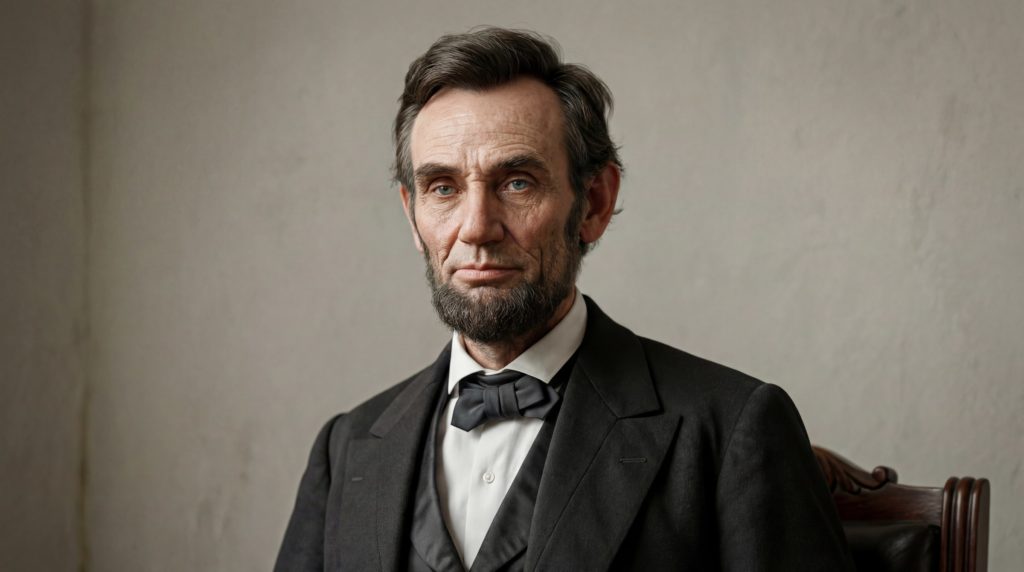
Abraham Lincoln
President of the United States; Lawyer
The rail-splitter's son who taught himself law by firelight, then held a fractured nation together through its bloodiest war -- and was shot dead five days after that war finally ended.[1, p. 275][2][3, p. 49][4, p. 9]
Bio
Who they were
Abraham Lincoln was born on 12 February 1809[5, p. 258] in a one-room log cabin near Hodgenville, Hardin County, Kentucky[6, p. 4], the son of the farmer Thomas Lincoln[3]. The family later moved on to Indiana and then Illinois, living in frontier poverty for much of Lincoln's childhood. Formal schooling was scarce and brief; Lincoln taught himself much of what he knew, reading by firelight whenever he could borrow a book. As a young man he split fence rails and clerked in a country store in New Salem, Illinois -- work that later gave him the popular nickname "the rail-splitter"[5].
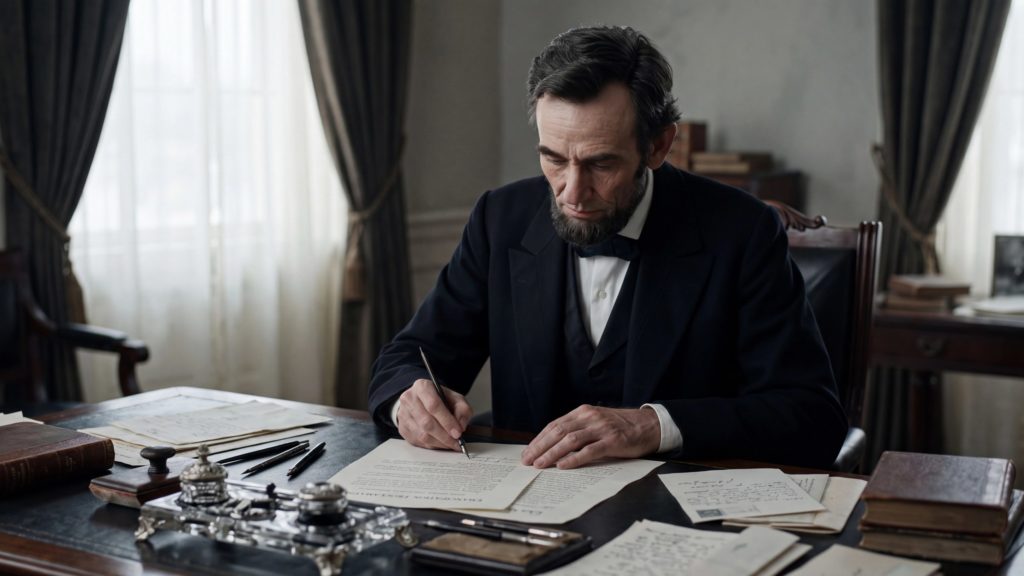
Lincoln taught himself law and built a career as a circuit-riding lawyer based in Springfield, Illinois[7, p. 1]. He served in the Illinois state legislature, resigning his seat in 1854 as the growing national argument over slavery pulled him back toward politics[8]. His reputation as a lawyer, debater and public speaker grew through the 1850s, including his 1858 debates against rival Stephen Douglas. The new Republican Party nominated him for president on 16 May 1860, and he was elected the 16th President of the United States on 6 November 1860[9][10, p. 1].
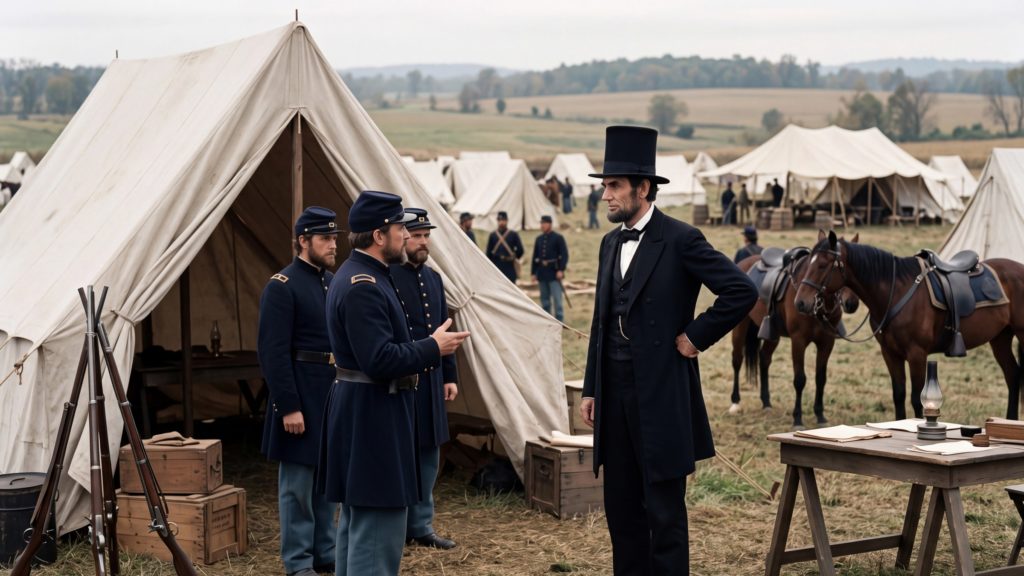
As president, Lincoln led the United States through the Civil War, the conflict between the Union and the seceding Southern states fought chiefly over slavery. In the middle of the war he issued the Emancipation Proclamation, declaring that enslaved people within the states still in rebellion "shall be then, thenceforward, and forever free"[11, p. 2]. In November 1863 he travelled to the battlefield at Gettysburg, Pennsylvania, to deliver a short dedication speech -- the Gettysburg Address -- now remembered as one of the most famous speeches in American history[12][4, p. 42]. Together, these acts reshaped both the war's purpose and the nation's future.
Only days after the Confederate general Robert E. Lee's surrender, Lincoln was shot by John Wilkes Booth while watching a play at Ford's Theatre in Washington, D.C.[13, p. 2]. He was carried across the street to the Petersen House, where he died early the next morning, 15 April 1865[4, p. 23][14]. His death, coming so soon after the war's end, stunned a country only just beginning to reckon with peace, and it turned his public image almost overnight from wartime leader into martyr.
Lincoln's presidency preserved the Union and set in motion the legal process that would end slavery in the United States. The Gettysburg Address reframed the war as a test of whether a nation "conceived in liberty" could endure[12], language still quoted in American civic life today. He is buried in a large memorial tomb in Oak Ridge Cemetery, Springfield, Illinois[15], which remains a major site of pilgrimage. His rise from a frontier cabin to the presidency also became a lasting symbol of opportunity within American political culture.
Those who knew Lincoln described a man given to storytelling and self-deprecating humour, which friends said helped carry him through long stretches of melancholy -- one biographer called his sense of humour "the safety-valve" for a mind otherwise weighed down[9]. He married Mary Todd on 4 November 1842[16, p. 233]; the couple lost two of their four sons before Lincoln's own death.
Legacy & Reputation
What’s the verdict?
Historians consistently rank Lincoln among the greatest American presidents for his leadership through the Civil War and his role in ending slavery. His public reputation has shifted over time, from a wartime figure of real controversy in his own day to the near-mythic “Great Emancipator” of later popular memory — and some modern historians caution against the simplest version of that myth, noting his views evolved gradually and were shaped by the politics of his era rather than fixed from the outset.[17]
Myth-buster
Think you know this one?
Lincoln is often remembered as having freed all enslaved people at a stroke with the Emancipation Proclamation. In fact, the Proclamation applied only to enslaved people in Confederate states still in rebellion, and slavery was not abolished everywhere in the United States until the Thirteenth Amendment took effect after his death[11, p. 2].
Quick Facts
The essentials
Quick Facts
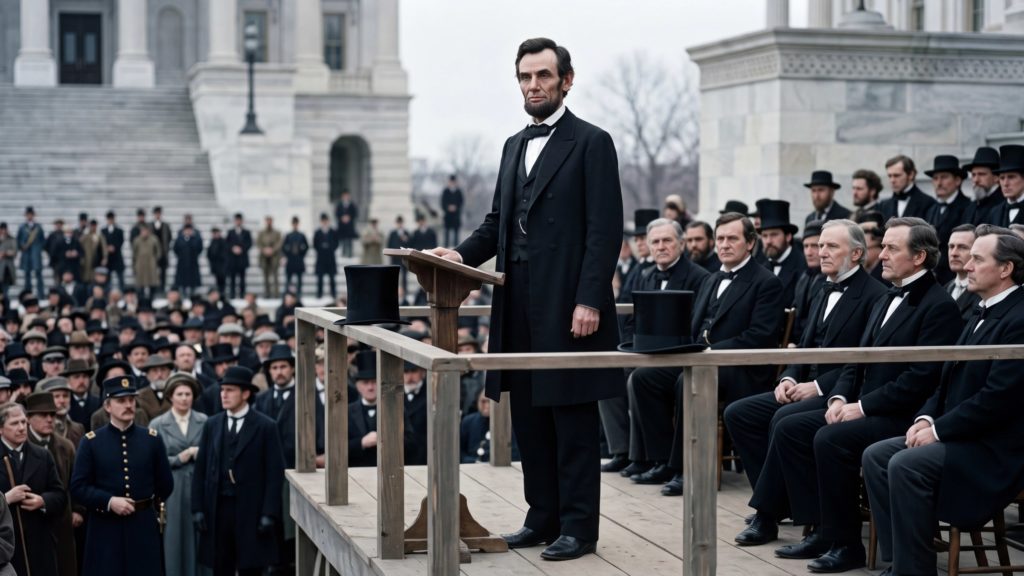
Roger has entered the historical rabbit hole...
Long before he split rails or read law by firelight, young Abraham Lincoln was a local wrestling champion. He reportedly took on the toughest brawler in the Clary's Grove gang, Jack Armstrong, and won[19].
Keith would like to clarify...
Lincoln's famous beard was not entirely his own idea. An eleven-year-old girl named Grace Bedell wrote to him in 1860 suggesting whiskers would improve his chances of election, and Lincoln grew them not long after[20].
One for the Ageonauts...
Lincoln remains the only US president to hold a patent. He designed a device for lifting boats over shallow river shoals using inflatable air chambers, though it was never actually manufactured[21, p. 53].
Roger insists this matters...
Lincoln's first military service came in the Black Hawk War of 1832, where the volunteers of his company elected him captain -- a mark of trust he later said gave him more satisfaction than almost any later honour[22].
Keith checked the sources...
The Emancipation Proclamation did not free every enslaved person in the United States. It applied only to enslaved people within Confederate states still in rebellion, declaring them "then, thenceforward, and forever free"[11, p. 2].
History gets strange here...
At six feet four inches tall, Lincoln remains the tallest president the United States has ever had -- a fact contemporaries mentioned often, since he towered over most rooms he walked into[23].
This sounds invented, but...
The 1858 Lincoln-Douglas debates, a series of face-offs against rival Stephen Douglas during an Illinois Senate race that Lincoln actually lost, made his name nationally and helped carry him to the presidency two years later[24].
Keith has spotted the quotation problem...
The line "you can fool some of the people all of the time" is widely attributed to Lincoln and appears in collections of his sayings, though historians note the evidence for exactly when and where he said it is thinner than the quote's fame suggests[25].
Roger said it. Keith checked it...
Behind the humour lay real grief: Lincoln's young son Willie died in the White House in 1862, and by his wife's own household's account the family was plunged into two years of mourning afterward[26, p. 288].
The past has entered the chat...
Those who knew Lincoln described his storytelling and self-deprecating humour as almost a survival mechanism -- one biographer called it "the safety-valve" that let him carry the weight of the presidency through long stretches of melancholy[9].
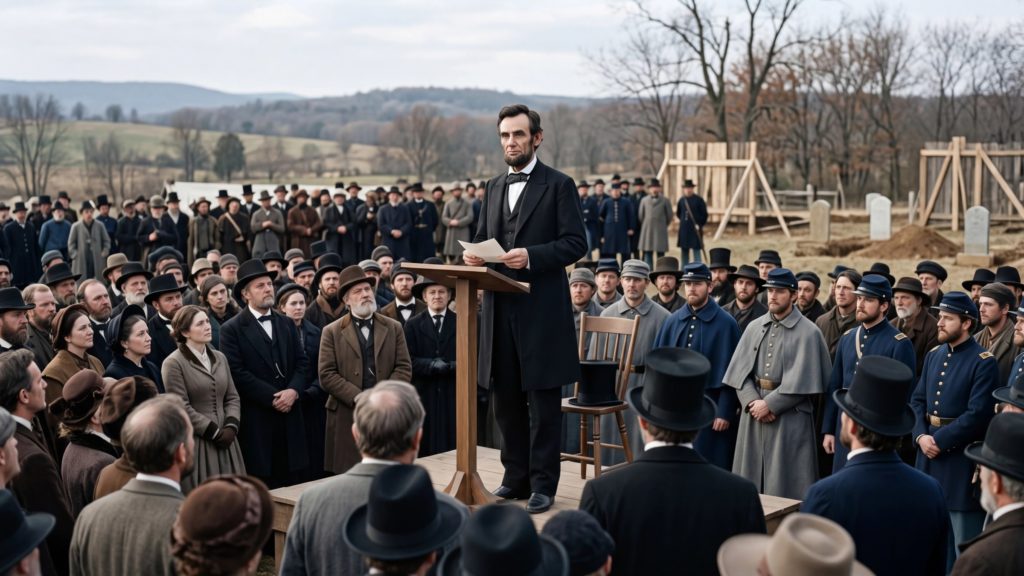
Four score and seven years ago our fathers brought forth on this continent a new nation, conceived in liberty, and dedicated to the proposition that all men are created equal.[12]
Abraham Lincoln
Opening line of the Gettysburg Address, delivered 19 November 1863 at the dedication of the Soldiers' National Cemetery, Gettysburg, Pennsylvania[12].
Timeline
How it unfolded
12 February 1809
Birth of Abraham Lincoln
Abraham Lincoln was born in a cabin in what was then Hardin County, Kentucky.[9][27, p. 3]
6 November 1860
Lincoln Elected President
Lincoln was elected as the 16th president of the United States, the first president avowedly opposed to legalized slavery.[10, p. 1]
4 March 1861
Lincoln's First Inauguration
Lincoln was inaugurated as president on this date, after seven slave-holding states had announced their secession, and the Confederate attack on Fort Sumter followed.[10, p. 1]
1 January 1863
Emancipation Proclamation
Lincoln issued the Emancipation Proclamation, declaring that all persons held as slaves within the rebellious states were henceforward free, though it applied only to states that had seceded.[11, p. 2]
19 November 1863
Gettysburg Address
Lincoln delivered his Gettysburg Address at the dedication of the Gettysburg National Cemetery, a speech that became one of his most famous.[14][4, p. 42]
4 March 1865
Lincoln's Second Inaugural Address
Lincoln delivered his second inaugural address, little more than a month before his death.[28][29, p. 55]
14 April 1865
Assassination at Ford's Theatre
John Wilkes Booth shot Lincoln at Ford's Theatre in Washington on the night of 14 April 1865, five days after General Lee surrendered at Appomattox.[30, p. 1][6, p. 19][4, p. 42]
15 April 1865
Death of Abraham Lincoln
Lincoln died on the morning after he was shot, ending his presidency just over a month into his second term.[5, p. 258][4, p. 48]
Dig Deeper
Copy any prompt below into your favourite AI chat to keep exploring.
Tell me how the Emancipation Proclamation worked, and which enslaved people it did and did not free.
What does Lincoln's willingness to change his position on slavery teach us about how leaders' views evolve under pressure?
Did an eleven-year-old girl's letter really make Lincoln grow his beard? Tell me what the evidence says.
Further Reading
Where to read more
Abraham Lincoln | Britannica
Encyclopaedia Britannica's core biography of Lincoln, covering his Kentucky birth, self-taught law career, and presidency through the Civil War to his 1865 assassination.
Why look at this: A fast, reliable way to check the full arc of Lincoln's life in one sitting -- useful background before digging into a single episode, such as his Black Hawk War service or the Emancipation Proclamation.
https://www.britannica.com/biography/Abraham-LincolnAbraham Lincoln: Life in Brief -- Miller Center, University of Virginia
A fuller presidential-scholarship treatment from the Miller Center's American President series, covering Lincoln's path to the White House, his wartime leadership, and the immediate aftermath of his assassination.
Why look at this: Goes deeper than a standard encyclopedia entry into why historians rank Lincoln's wartime leadership so highly, and traces how the Emancipation Proclamation shifted the Civil War's purpose from preserving the Union to ending slavery.
https://millercenter.org/president/lincoln/life-in-briefAbraham Lincoln Papers -- Library of Congress
The Library of Congress's digitised collection of roughly 20,000 Lincoln manuscripts, including his correspondence, drafts of speeches, and the earliest surviving copies of the Gettysburg Address.
Why look at this: Lets a reader look directly at Lincoln's own drafts and correspondence -- including material from the Emancipation Proclamation period -- rather than someone else's account of them.
https://www.loc.gov/collections/abraham-lincoln-papers/Related
Keep exploring
Places
Can be seen in
Where this shows up
References
Sources
Sources
- BookRecollections of Abraham Lincoln, 1847-1865 by Ward Hill Lamon. Page 275. ↑
- BookLincoln's Inaugurals, Addresses and Letters (Selections) by Abraham Lincoln ↑
- BookThe early life of Abraham Lincoln:: containing many unpublished documents and unpublished reminiscences of Lincoln's early friends by Ida M. Tarbell. Page 49. ↑
- WebsiteFord's Theatre and the House Where Lincoln Died (NPS Historical Handbook 3). Pages 9, 23, 42, 48. ↑
- BookMedals and medallions by Lincoln Financial Foundation Collection. Page 258. ↑
- BookThe lincoln centenary in literature : selections from the principal magazines of February and March, 1909, together with… (compiled by William Abbatt). Pages 4, 19. ↑
- WebsiteAbraham Lincoln, "A House Divided": Speech at Springfield, Illinois (Voices of Democracy, U. Maryland). Page 1. ↑
- BookAbraham Lincoln and the Union; by Nathaniel W. Stephenson ↑
- BookAbraham Lincoln by William Eleroy Curtis ↑
- WebsiteAbraham Lincoln - First Inaugural Address and Message to the 37th Congress (1861). Page 1. ↑
- Website150th Anniversary of the Emancipation Proclamation at the National Archives (brochure). Page 2. ↑
- BookLincoln's Gettysburg Address: Given November 19, 1863 on the battlefield near Gettysburg, Pennsylvania, USA by Abraham Lincoln ↑
- WebsiteFord's Theatre, Lincoln's Assassination and its Aftermath - successful NEH grant narrative. Page 2. ↑
- BookThe Soul of Abraham Lincoln by William E. Barton ↑
- BookYarns and stories by Abraham Lincoln, America's greatest story teller ... by Alexander K. McClure ↑
- BookAbraham Lincoln, the prairie years by Carl Sandburg. Page 233. ↑
- BookConstitutional problems under Lincoln by J. G. Randall ↑
- Book"Honest Abe": A Study in Integrity Based on the Early Life of Abraham Lincoln by Alonzo Rothschild ↑
- BookA Short Life of Abraham Lincoln: Condensed from Nicolay & Hay's Abraham Lincoln: A History by John G. Nicolay ↑
- BookThe Papers and Writings of Abraham Lincoln — Volume 5: 1858-1862 by Abraham Lincoln ↑
- BookAbraham Lincoln: The True Story of a Great Life, Volume 1 (of 2) by William Henry Herndon and Jesse William Weik. Page 53. ↑
- BookAbraham Lincoln: a History — Volume 01 by John Hay and John G. Nicolay ↑
- BookThe Every-day Life of Abraham Lincoln: A Narrative And Descriptive Biography With Pen-Pictures And Personal; Recollections By Those… by Francis F. Browne ↑
- BookThe Story of Young Abraham Lincoln by Wayne Whipple ↑
- Book"Abe" Lincoln's anecdotes and stories : a collection of the best stories told by Lincoln, which made him… (compiled by R. D. Wordsworth) ↑
- BookBehind the Scenes; or, Thirty years a slave, and Four Years in the White House by Elizabeth Keckley. Page 288. ↑
- BookThe autobiography of Abraham Lincoln by Abraham Lincoln. Page 3. ↑
- BookAbraham Lincoln's Second Inaugural Address by Abraham Lincoln ↑
- BookLincoln in the telegraph office : recollections of the United States Military Telegraph Corps during the Civil War by David Homer Bates. Page 55. ↑
- WebsiteLincoln's Death: Memories and Images - analysis activity (Smithsonian Institution Archives). Page 1. ↑